
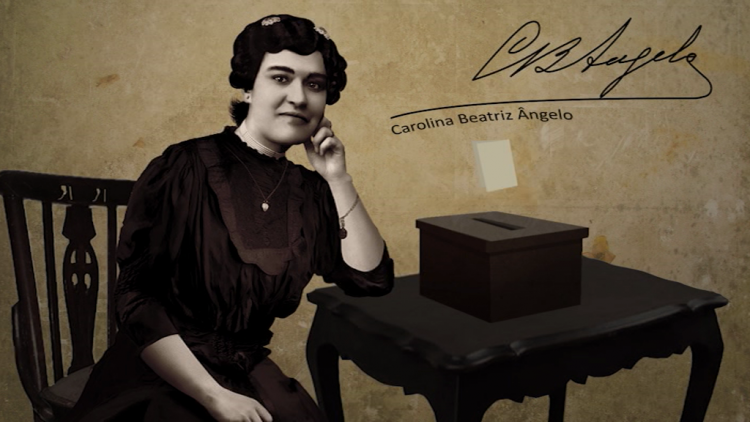
CAROLINA BEATRIZ ÂNGELO – The First Woman to Vote in Portugal (1911)
Fonte: https://www.acegis.com/2020/05/carolina-beatriz-angelo-a-primeira-mulher-portuguesa-a-conquistar-o-direito-ao-voto-2/ Learn European Portuguese through the inspiring story of Carolina Beatriz Ângelo, the first woman to vote in Portugal, and understand Portuguese history and society. Leitura Guiada – Escolhe o teu nível Guided Reading – Choose your level First, read to understand the main idea. Next, read to review vocabulary and verb tenses. Finally, read aloud to improve pronunciation. A2 – Simple Reading Foca-te em / Focus on: Quem? / Who? – Carolina Beatriz Ângelo O quê? / What? – O primeiro voto Quando? / When? – 1911 B1 – Deeper Reading Foca-te em / Focus on: Porque foi importante / Why it was important Quais foram as consequências legais e sociais / What were the legal and social consequences Carolina Beatriz Ângelo – A primeira mulher a votar em Portugal (1911) Contexto | Cultura e Sociedade (Bilíngue) Context | Culture & Society (Bilingual) Carolina Beatriz Ângelo foi médica, republicana e sufragista. Nasceu em 1878 e tornou-se uma figura marcante da história portuguesa ao ser a primeira mulher a votar em Portugal, no dia 28 de maio de 1911, nas eleições para a Assembleia Nacional Constituinte. Na altura, o código eleitoral dava direito de voto a cidadãos portugueses maiores de 21 anos que soubessem ler e escrever ou fossem chefes de família. A lei não especificava o sexo dos eleitores. Carolina, viúva, com formação superior e chefe de família, reunia todas as condições legais. Mesmo assim, o seu pedido para votar foi inicialmente recusado. Carolina não desistiu: recorreu ao tribunal e ganhou a causa. O juiz decidiu que a lei não excluía as mulheres. Graças a essa decisão, Carolina pôde votar, ficando inscrita nos cadernos eleitorais da freguesia de S. Jorge de Arroios, em Lisboa. A imprensa da época deu grande destaque ao acontecimento. O jornal A Capital falou numa “vitória do feminismo nacional”, e a Ilustração Portuguesa publicou uma reportagem com fotografias de Carolina Beatriz Ângelo ao lado de Ana de Castro Osório, Presidente da Liga das Sufragistas Portuguesas. Apesar do impacto deste momento, o voto feminino não foi consagrado na Constituição de 1911. Em 1913, uma nova lei eleitoral voltou a limitar o direito de voto apenas aos cidadãos do sexo masculino. Carolina Beatriz Ângelo morreu em outubro de 1911, com apenas 33 anos, sem ver reconhecido o direito de voto das mulheres em Portugal. O sufrágio feminino só foi parcialmente introduzido em 1931. O sufrágio universal, sem distinção de sexo, só chegou depois do 25 de Abril de 1974. Carolina Beatriz Ângelo was a doctor, a republican and a suffragist. Born in 1878, she became a key figure in Portuguese history as the first woman to vote in Portugal, on 28 May 1911, during the elections for the National Constituent Assembly. At the time, the electoral law granted voting rights to Portuguese citizens over 21 who could read and write or were heads of household. The law did not mention gender. Carolina, a widow with a university degree and head of her family, legally met all the requirements. Even so, her request to vote was first rejected. Carolina appealed to the courts and won. The judge ruled that the law did not exclude women. As a result, she was allowed to vote in the parish of S. Jorge de Arroios, in Lisbon. The press widely reported the event. The newspaper A Capital described it as a victory for Portuguese feminism, and Ilustração Portuguesa published a report with photographs of Carolina alongside Ana de Castro Osório, president of the Portuguese Suffragist League. Despite the impact of this historic moment, women’s voting rights were not included in the 1911 Constitution. In 1913, a new electoral law once again restricted voting to men. Carolina Beatriz Ângelo died later that year, aged just 33, without seeing women gain the right to vote in Portugal. Women’s suffrage was partially introduced in 1931, but universal suffrage only became a reality after the 25 April 1974 Revolution. O Desafio – Aprendizagem Ativa The Challenge – Active Learning Desafio de Escrita Writing Challenge Na tua opinião, porque foi o voto de Carolina Beatriz Ângelo tão importante, mesmo não tendo mudado a lei imediatamente? Escreve três frases e manda para o email info@learnportuguesewithsusana.com . In your opinion, why was Carolina Beatriz Ângelo’s vote so important, even though it didn’t change the law immediately? Write three sentences and send them by email to info@learnportuguesewithsusana.com . Desafio de Conversação Speaking Challenge Fala durante 1 minuto sobre uma mulher importante da história do teu país, grava um áudio e manda para o email info@learnportuguesewithsusana.com . Speak for one minute about an important woman from your country’s history, record an audio and send it by email to info@learnportuguesewithsusana.com Mini Vocabulário Mini Vocabulary Portuguese English (o) sufrágio suffrage (o / a) chefe de família head of household (o) recenseamento voter registration (o) tribunal court (os) direitos civis civil rights Pronto para levar o teu português ao nível seguinte? Ready to take your Portuguese to the next level? Explore our website
CAROLINA BEATRIZ ÂNGELO – The First Woman to Vote in Portugal (1911) Read More »